Kumturu · 669 CE
Welcome to Kumturu
Guntur, Andhra Pradesh, India. South bank of the Krishna.
Kumturu → Gomturu / Gonturu → Gunturu → Guntur
This is a public history of Guntur, a city in Andhra Pradesh, India — written for the people who live here, and for the rest of the world.
We call the town Guntur. In English records it is Guntur or, older, Guntoor. In Telugu it is Gunturu. A thousand years ago copper plates called it Gomturu, or Gonturu. In 669 CE, in the first year of the Eastern Chalukya king Vishnuvardhana II, three copper plates now at Pune named a place Kumturu. The Archaeological Survey of India reads that as the earliest known writing of this town’s name.
This site follows that chain: Kumturu, then Gomturu, then Gunturu, then Guntur. It does not pretend that a name is the same as a city wall. It says what the stones and the older books allow us to say, and it stops where our permission to tell the story stops — on the morning of 15 August 1947.
A river country
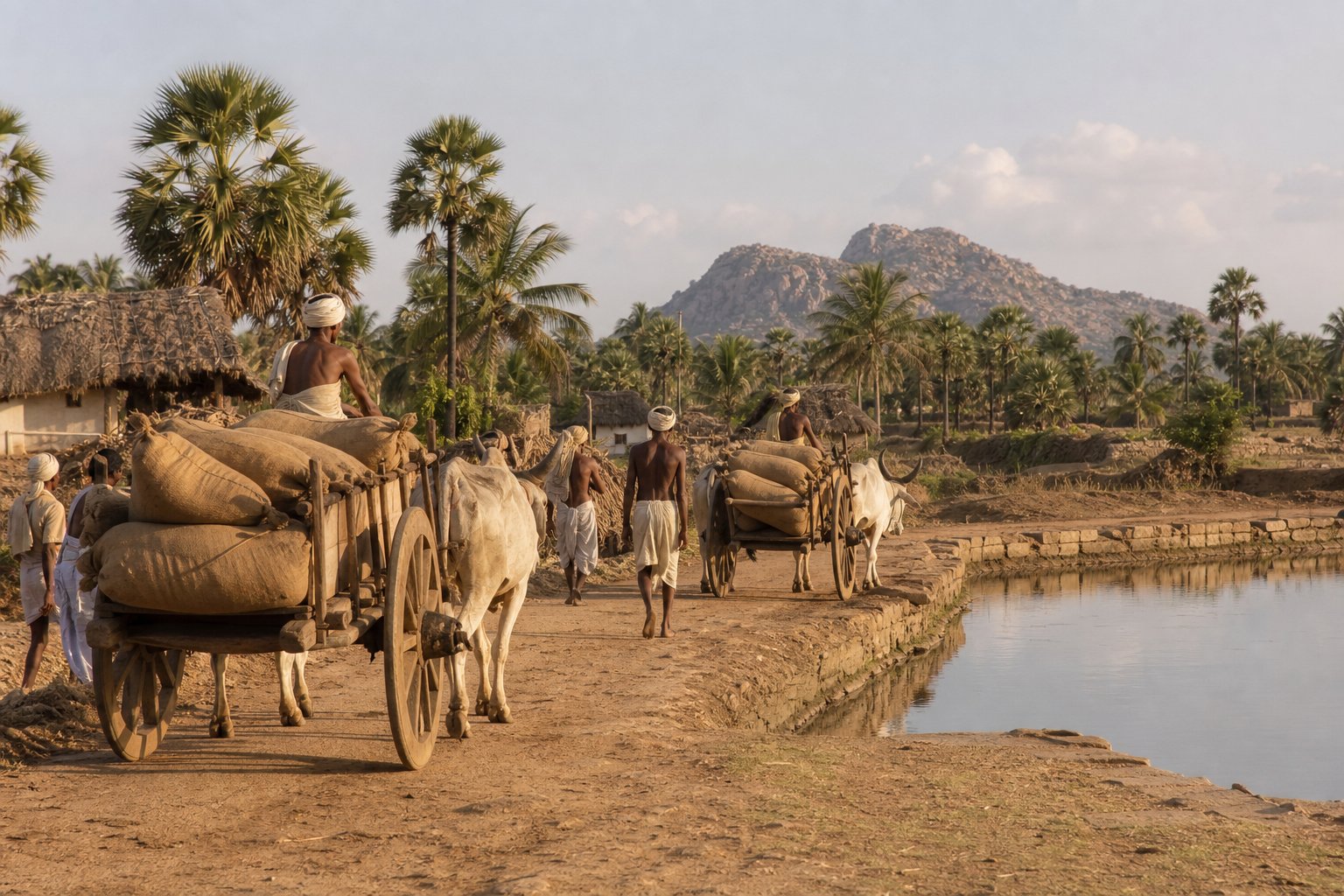
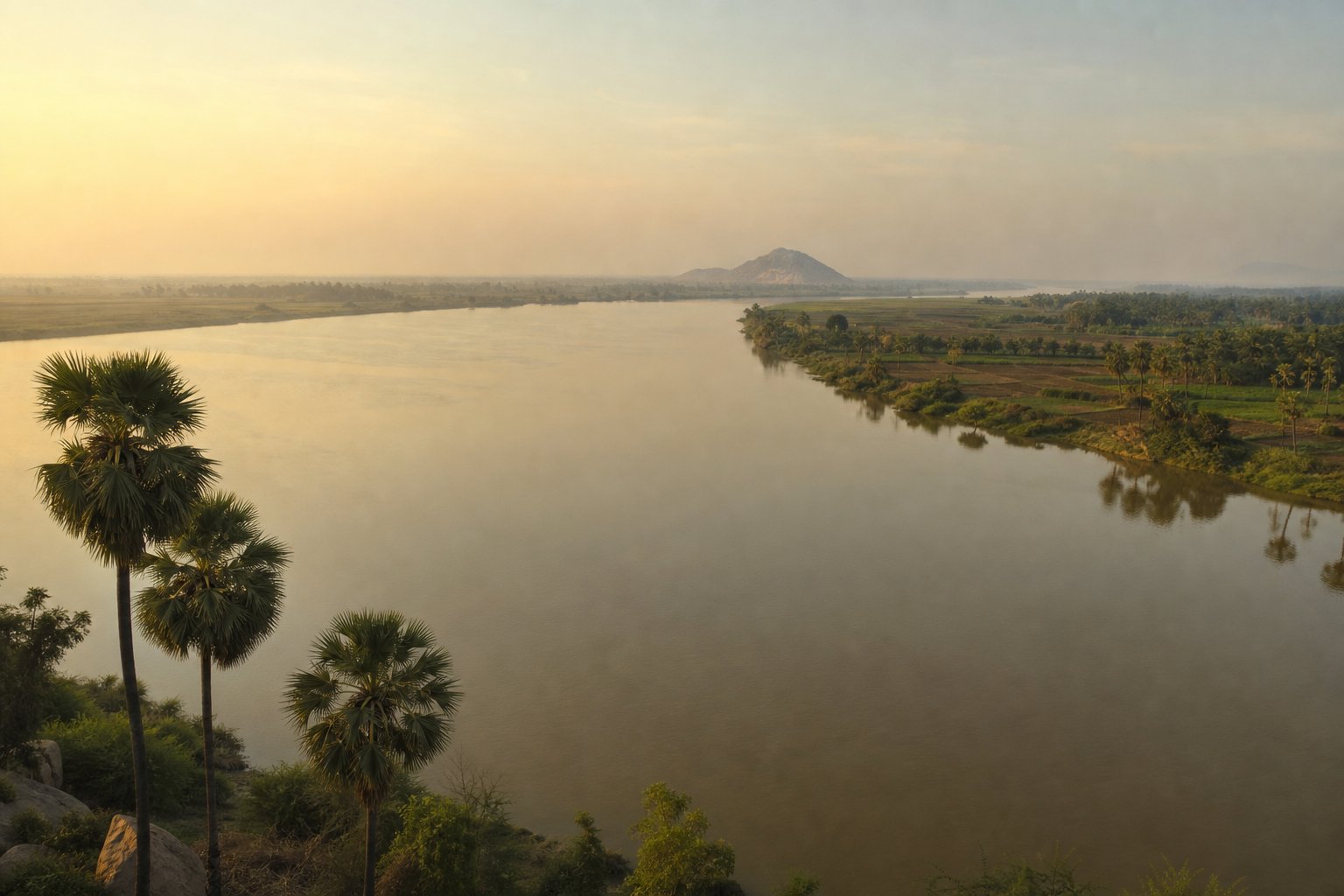
The story of Guntur is a river story. The Krishna leaves the Deccan hills, passes the Palnadu country, and opens into a broad, fertile delta before it meets the Bay of Bengal. Hill, black-cotton soil, and water meet here. People have lived in that meeting for a very long time.
Palaeolithic tools have been found on this Deccan. Standing stones of the megalithic centuries still rise at Karampudi and Gangalakunta. In the delta, at Bhattiprolu, a town assembly headed by king Kuberaka placed relics of the Buddha in crystal and stone, in letters not later than about 200 BCE. Upstream, Dhanyakataka — Dharanikota beside Amaravati — was a city of the Sadas and the Satavahanas. The Ikshvakus made Vijayapuri, today’s Nagarjunakonda, their capital. Later houses — Pallavas, Anandas, Vishnukundins, Eastern Chalukyas of Vengi — all left a mark on this tract.
Then come the centuries everyone in Guntur already knows in song: Velanadu and Palnadu, the Kakatiyas at Chebrolu and Motupalli, the Reddis on the hill of Kondavidu, Krishnadevaraya on 23 June 1515, Golconda until 1687. After that, the Circars, a French headquarters in an older village, the Company, a district, a municipality, canals, a college, a hospital, and a long walk toward freedom that ends, on this site, at Tenali on 12 August 1942 and at Independence on 15 August 1947.
What happened after that morning — including the formation of Andhra State in 1953 — is beyond this site.
How to read these pages
Nothing here is invented. Kings, dates, and temple founders appear only when a source names them. Where a story is tradition, the page says so. Where two honest dates sit side by side — as at Undavalli — both are given.
This is history written for Guntur people. It is warm on purpose. It is also careful on purpose.
Pages
- The name — Kumturu → Gomturu → Gunturu → Guntur
- Timeline — dated claims, from the first tools to 15 August 1947
- Ancient — river, first people, Bhattiprolu, Amaravati, Chebrolu, Ikshvakus, Undavalli
- Medieval — Velanadu, Palnadu, Kakatiyas, Kondavidu, Krishnadevaraya, Golconda
- To Independence — Circars, Company, district, town, freedom movement
- Places — short cards for the towns and hills
- Sources — the books, stones, and reports behind these pages
Welcome. The name is old. The river is older. The people were here before either was written down.